
Protected Characteristics
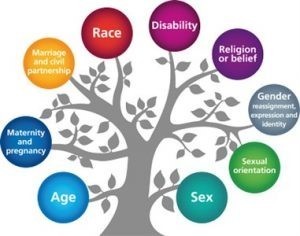
In UK schools, protected characteristics are nine specific personal traits legally safeguarded from discrimination under the Equality Act 2010.
According to the Equality and Human Rights Commission (EHRC), schools have a legal duty to prevent discrimination, harassment, and victimisation for pupils and staff for the following areas.
The Nine Protected Characteristics
- Age: How old someone is, whether they are young or old. Everyone deserves respect no matter their age.
- Disability: Having a physical or mental difference that might change how someone learns, moves, or does everyday things.
- Gender Reassignment: When someone feels differently about their gender than the one they were given when they were born.
- Marriage and Civil Partnership: Being legally married or in a civil partnership with someone you love.
- Pregnancy and Maternity: Being pregnant or having a new baby.
- Race: Where someone comes from, the colour of their skin, or their cultural background.
- Religion or Belief: What religion someone follows, or the personal beliefs and values they choose to live by.
- Sex: Whether someone is male or female.
- Sexual Orientation: Who someone is attracted to or falls in love with as they grow up.
Guidance on teaching the Protected Characteristics:
The DfE statutory guidance confirms that from the outset schools must not discriminate unlawfully against pupils, staff or parents because of their age, sex, race, marriage, civil partnership or sexual orientation. The guidance calls upon schools to take positive action to deal with disadvantages affecting pupils because of a Protected Characteristic. In order to help schools meet the needs of pupils, the guidance proposes that the school consider the make-up of the student groups and consider whether it would be necessary to put in additional support. Schools with a religious character are not exempt from complying with the relevant provisions of the Equality Act 2010 with regard to the protected Characteristics. However, the religious background of all pupils will be taken into account when planning the teaching so when topics that are included as part of the RSHE programme are handled appropriately.
The dignity of the human person is central to the life and teaching of the Catholic faith and this is foundational to any policies including the Protected Characteristics.
So God created humanity in his own image, in the image of God he created them; male and female he created them – Genesis 1:27
Upholding the dignity of the human and ensuring that groups and individuals are not disadvantaged because of a protected characteristic. It is integral to teaching RSHE within a Catholic school context. However, it is not the only consideration; in the statutory guidance the DfE confirms that all ‘All schools must teach about faith perspectives. In particular, schools with a religious character may teach the distinctive faith perspective on relationships.’ This is further supported by the Bishops of England and Wales in ‘Learning to Love’ a teaching document which provides ‘An introduction to Catholic Relationships and Sex Education for Catholic educators.’
The Protected Characteristics are taught in our curriculum and embedded through:
- Our school core ethos, school mission statement and Gospel Values.
- School Behaviour Policy.
- Conscious role modelling by all adults in the school community.
- Active engagement and communication with parents and carers.
- Personal, Social, Health and Economic education (PSHE) lessons.
- Journey in Love scheme of work
- School assemblies.
- Promoting articulation by building appropriate coherent vocabulary.
- Educational visits & extracurricular activities including Wraparound care
- Pupil Parliament (School Council) and pupil voice.
- Personal Development programmes & Interventions.
- Promoting British Values in our school life.
- A love of reading and actively promoting a range of authors and genres.
- Sports events and competitions
- Cultural Events
- Themed Days and Weeks
- Celebrating Achievements
We adapt our curriculum to meet the diverse needs of our pupils, ensuring content is accessible, meaningful and age-appropriate. Through a range of learning experiences, assemblies and discussions, we help pupils understand the importance of treating everyone with dignity and respect.
We work in partnership with parents, carers, and external agencies to reinforce these values across all aspects of school life.
At our school, diversity, equity and inclusion is not just taught; it is lived through our school day and experiences.
The teaching of the protected characteristics is not limited to lessons alone; it is evident through our school’s ethos and daily life. From the way we model inclusive language and behaviour, to how we celebrate diversity through events, displays and community visits, we ensure that equality and respect are encouraged in every interaction. Through a consistent and whole-school approach, we create a culture where every pupil feels seen, valued and empowered to be themselves.
Self-Esteem, Self-Knowledge and Self-Confidence
We place a strong emphasis on developing our pupils’ self-esteem, helping them to build a sense of self-worth and confidence in their abilities. At our school, we celebrate achievements of all sizes and encourage pupils to reflect on their own progress and strengths. Activities are designed to support self-knowledge and emotional literacy, helping pupils to understand who they are and to feel proud of their identity.
Everyone is unique and has different talents and attributes
Every pupil at our school is recognised as unique, with their own gifts, challenges and potential. We teach pupils that difference is not only accepted but celebrated. Through class projects, peer learning and inclusive play, pupils learn that everyone has something valuable to contribute and that diverse talents and attributes enrich our school community.
Respect for Democracy & Support for Participation in the Democratic Process
Our pupils are taught the importance of having a voice and being heard. Through Pupil Parliament elections and voting, we help pupils understand how democracy works. Pupils are encouraged to share their views respectfully and to understand how their ideas can influence positive change.
Acceptance of responsibility and teaching pupils to make good choices
Our school Behaviour Policy states we have high expectations of pupil behaviour. This robust policy lays out our expectations and management of behaviour and supports pupils to take responsibility and learn strategies to manage their own behaviour, based on reflection and positive choices rather than punishment.
An Understanding of Equality, Human Rights and Protected Characteristics
Through PSHE/RSHE lessons and across the curriculum, pupils learn that everyone has the right to be treated fairly and to live free from discrimination. These concepts may be simplified and delivered using experiential learning and supported discussions suited to the needs of each pupil.
An appreciation that living under the Rule of Law protects individual citizens
We teach pupils that laws and rules are in place to keep everyone safe and treated fairly. As appropriate, pupils explore how rules help people live together peacefully and protect their rights. This supports their understanding of social responsibility and personal safety.
There is freedom to choose and hold other faiths and beliefs
Our school promotes respect for all religions and worldviews. We teach pupils that everyone has the legal right to practice (or not practice) a religion. Lessons and assemblies include opportunities to learn about a range of beliefs and to understand that differences in faith are normal and valuable.
An acceptance and tolerance that other people have different faiths or beliefs
We make it clear that differences in beliefs or personal choices should never lead to bullying or exclusion. Pupils are supported to be curious, ask respectful questions, and develop empathy for others with different experiences and perspectives.
The importance of identifying and combating discrimination
Pupils are taught how to recognise discrimination in different forms, and to know what to do if they experience or witness it. We empower pupils to speak up and seek help when they or others are treated unfairly.
Parents working with the school to ensure that children’s needs are met
We work closely with parents and carers to ensure our approach to equality and inclusion is meaningful and responsive. Through regular communication, feedback and review meetings, parents are encouraged to share their insights on any barriers their pupils face. Their voices help guide school policy, resource planning and staff training so that every child has the opportunity to thrive.
Diversity, Equity and Inclusion through reading
Our school library and reading resources offer opportunity for positive and guided discussion of the protected characteristics. We strive to create a reading culture where pupils can share their opinions and ask questions.